
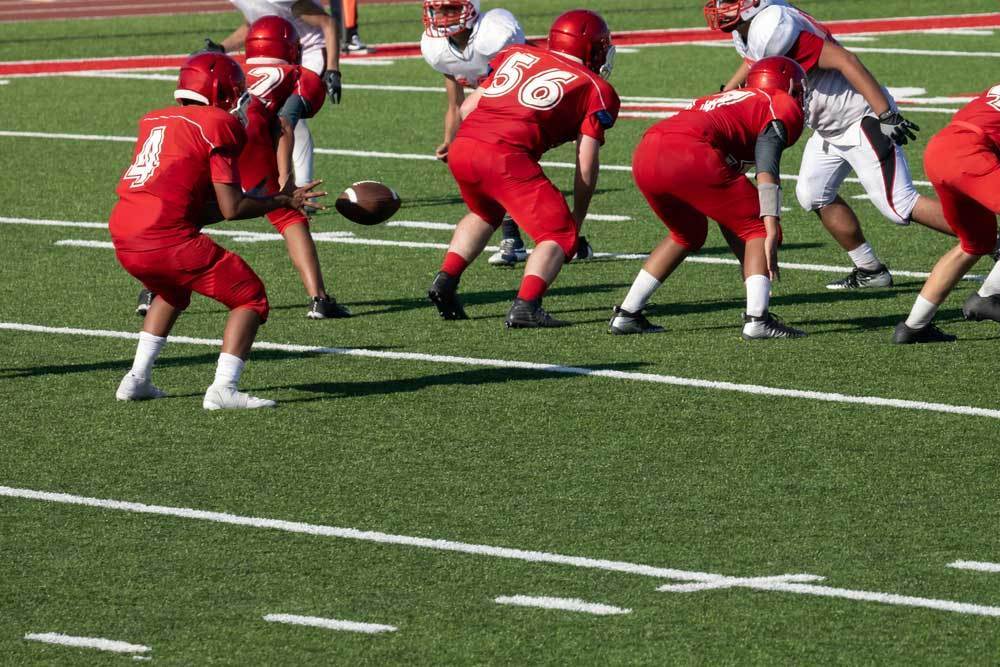
As summer winds down and fall sports season begins, it is important to make sure your favorite athlete is healthy and able to stay on the field. From two-a-day practices to conditioning drills, the weeks leading up to the first kickoff are intense—and they can take a toll on the body. For many young athletes, this time is just as much about recovery and injury prevention as it is about speed and strength.
At Skare Spine & Performance (SSP), we specialize in keeping athletes performing at their highest level.
Our focus is on helping them move better, recover faster, and stay injury-free.
In this blog, I want to break down our approach to athlete care, why it’s different, and how we help young athletes step onto the field with confidence.
Why High School Athletes Need More Than Just Training
It’s easy to think of preseason prep as endless drills, weight room sessions, and practice —but that’s only half the equation. Athletes are only as strong as their ability to recover, adapt, and move efficiently. Without proper recovery strategies and corrective care, small aches can snowball into serious injuries, cutting a season short.
High school athletes face unique challenges:
- Growing bodies – Rapid growth spurts can create imbalances and stress on joints and muscles.
- Year-round sports – Many athletes play multiple sports or participate in club teams, leaving little downtime for recovery.
- High demands and limited resources – Not all schools have dedicated athletic trainers or recovery specialists, so injuries are often overlooked until they become major problems.
The numbers back this up. Overuse injuries—the kind that build slowly rather than happening in one dramatic moment—account for roughly half of all youth sports injuries. And athletes who specialize in a single sport year-round get injured at measurably higher rates than those who play multiple sports or build in real downtime. These aren’t freak accidents. They’re predictable, and more importantly, they’re preventable with the right approach.
The biggest predictor of injury is a previous injury. Therefore, if your athlete has already sustained an injury, they are more likely to re-injure that area, especially if they didn’t receive proper care to heal the area and reestablish proper movement and muscle recruitment patterns.
This is where Skare Spine & Performance fills the gap. We’re not just here to help when something hurts—we’re here to optimize movement, prevent injuries, and build a foundation for lifelong athletic performance.
Many athletes deal with lingering injuries from the previous school year and hope that they go away over the summer, but still find they have lingering pain or symptoms. As summer winds down and fall camp approaches, it’s essential to receive proper care to resolve these injuries for the season.
A Note on Year-Round Specialization
More and more, we’re seeing athletes pushed to pick one sport early and play it twelve months a year—club season bleeding into school season with no real break in between. The intention is good: more reps, more skill, and more opportunity. But the research is clear that early single-sport specialization increases injury risk, not just from overuse but from repeating the same movement patterns without variation. Kids who play multiple sports tend to be more well-rounded athletes and stay healthier. If your athlete is locked into one sport, that makes intentional recovery and cross-training even more important—not optional.
Our Athlete-Centered Approach
What sets SSP apart is our integration of chiropractic care, functional rehab, and sports performance. Rather than focusing only on pain relief, we look at the whole picture: how an athlete moves, where their strengths and weaknesses are, and what needs to be done to improve both performance and durability.
- Comprehensive Movement Assessments
Every athlete is different. That’s why we start with a detailed movement screen and functional assessment to identify mobility restrictions, stability deficits, and potential areas of risk. Think of it as a performance blueprint—it tells us where an athlete is strong, where they’re vulnerable, and what we can do to fine-tune their mechanics.
Football places huge demands on the spine and joints. Our chiropractic adjustments are not about “quick cracks and out the door.” Instead, we focus on restoring normal motion and function in a way that supports how the body moves during sport—whether that’s improving hip rotation for explosive sprints or maintaining shoulder stability for tackling.
- Active Rehab and Performance Training
This is where we bridge the gap between pain and performance. Using principles of Dynamic Neuromuscular Stabilization (DNS), corrective exercise, and functional strength training, we build strong, stable, and resilient athletes. Our sessions often combine mobility drills, resistance training, and sport-specific movements designed to enhance performance while reducing injury risk.
- Recovery Tools
High-intensity training demands high-level recovery. We incorporate dry needling, soft-tissue release, Normatec recovery, and tailored recovery protocols to help athletes bounce back faster between practices and games. Our goal is to keep them on the field.
But it’s worth saying that the most powerful recovery tools aren’t tools at all—they’re free. Sleep is where the body actually repairs and adapts, and most high school athletes aren’t getting nearly enough of it. Proper fueling matters just as much; you can’t recover from hard training on skipped meals and energy drinks. We coach our athletes on these fundamentals because all the dry needling and Normatec in the world can’t make up for a body that’s under-slept and under-fueled.
Common Football Injuries We See (and How We Handle Them)
Injuries are inevitable, but with the right care, many common injuries can be minimized—or avoided altogether.
Football is uniquely demanding on the body. The combination of repeated high-impact contact, explosive starts and stops, and the sheer volume of reps during camp means these injuries rarely come from one bad play—they build up. A hamstring that’s been tight all week finally pulls on a sprint. A shoulder that’s been sore from blocking gives out on a tackle. That’s why we look upstream at the movement patterns and imbalances setting these injuries up, rather than just treating them after the fact.
Some of the most frequent issues we treat include:
- Low back pain – Often caused by poor hip mobility or improper core stability.
- Shoulder strains – From repetitive blocking and tackling.
- Hamstring or quad pulls – Typically due to muscle imbalances or lack of proper warm-up/recovery.
- Ankle sprains – A result of quick cuts, landing on someone’s foot, and uneven playing surfaces.
- Knee pain – Especially patellar tendon issues from explosive running and jumping.
Our treatment doesn’t just stop at symptom relief. We dig into why an injury happened—was it a movement dysfunction, a strength imbalance, or something else? Then we create a plan that not only addresses the current issue but also reduces the risk of recurrence.
Building Resilient Athletes for the Long Haul
One of the most rewarding parts of working with high school athletes is seeing them build confidence in their bodies. When a young athlete learns how to move efficiently, recover properly, and understand what their body needs, they gain a competitive edge that training alone can’t provide.
We don’t just want athletes to survive a season—we want them to thrive.
This means:
- Better mobility – So they can move with speed and fluidity.
- Improved stability and strength – To withstand hits and heavy training loads.
- Smarter recovery habits – To keep them fresh and injury-free.
Parents: What You Should Know About Your Athlete’s Body
Parents often tell us they’re unsure when to bring their athlete in. Our answer? The earlier, the better. It’s not about waiting until something is wrong—it’s about staying ahead of problems. Too many times, athletes just wait to see if their pain will get better, when it could have already been taken care of with proper treatment.
If your athlete is complaining about nagging aches, struggling to recover, or feeling “tight” all the time, that’s a sign they could benefit from professional care. Think of us as part of your athlete’s training team, working alongside their coaches to keep them in peak condition.
One more thing parents should hear: not every injury is one we adjust or rehab. Head injuries in particular need to be taken seriously and managed as part of a broader medical team. We know our lane, and part of keeping your athlete safe is making sure the right person is handling the right problem—and communicating with their coaches, trainers, and physicians when that’s what’s needed.
Ready to Get Your Athlete Game-Day Ready?
If you’re a parent, coach, or athlete who wants to start the season healthy and strong, now’s the time to act. At Skare Spine & Performance, we offer personalized care for athletes of all levels, with a focus on results that last.
Fall camp is happening now, which makes this the ideal window to get ahead of problems rather than chase them mid-season. We keep a limited number of preseason assessment slots open this time of year, and they fill up fast.
- New patients: Schedule an initial assessment to get a custom plan built around your sport.
- Athletes in-season: Come in for recovery sessions or performance tune-ups to stay at your peak.
Book online at skarespineperform.janeapp.com or call us at 507-200-0449. Don’t wait until an injury takes your athlete out of the game—let’s make this season their best yet.